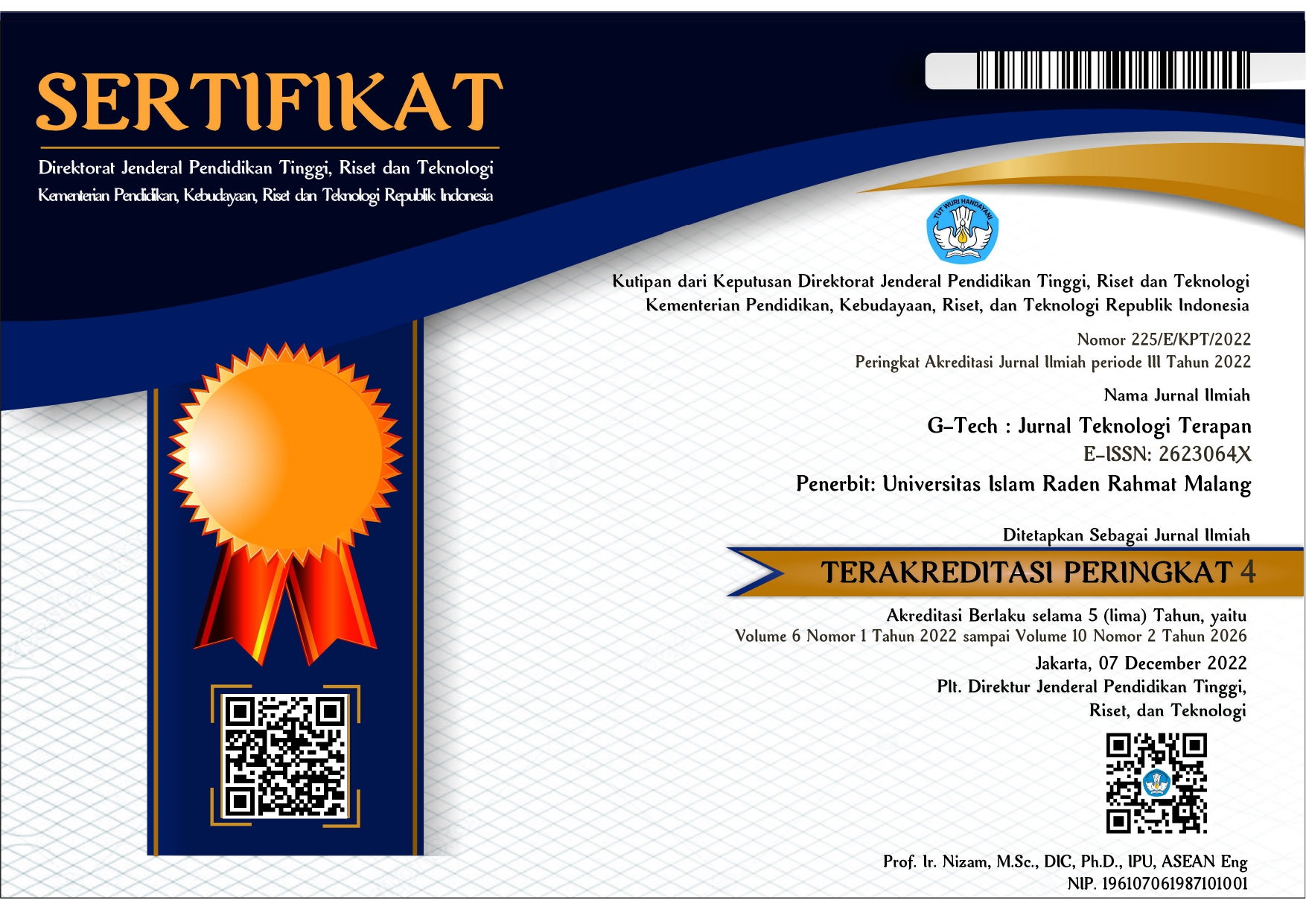
Pemodelan Indeks Kebahagiaan di Indonesia Berdasarkan Pendekatan Mixed Geographically Weighted Regression
DOI:
https://doi.org/10.33379/gtech.v8i1.3639Keywords:
Happiness Index, Mixed Geographically Weighted Regression, Modelling, R^2, SDGsAbstract
The well-being of society, involving the fulfilment of basic needs and opportunities for education and employment, can be measured through the happiness index. This research aims to assist the Indonesian government in achieving Sustainable Development Goal 3 related to Health and Well-being. It is hoped that by comprehending these factors, the government can improve the health and well-being of the Indonesian population. The happiness index varies across different geographical regions due to factors such as culture, social dynamics, and the environment, which can have different impacts from one region to another. Given the randomness in data patterns stemming from the diverse provinces in Indonesia, this study employs the Mixed Geographically Weighted Regression (MGWR) method. Results reveal that the MGWR model, utilizing a fixed Gaussian kernel weight, yields the lowest Akaike’s Information Criterion Corrected and the highest at 87.2%, underscoring its precision in modeling the happiness index in Indonesia.
References
Astiti, N. P. Y., & Saitri, P. W. (2017). Pengaruh Corporate Social Responsibility terhadap Kesejahteraan Masyarakat dan Citra Perusahaan. Jurnal Bisnis Dan Kewirausahaan, 12(2), 94.
Badan Pusat Statistik. (2022). Statistik Indonesia Tahun 2022. Jakarta: Badan Pusat Statistik.
Fotheringham, A. S., Yang, W., & Kang, W. (2017). Multiscale Geographically Weighted Regression (MGWR). Annals of the American Association of Geographers, 107(6), 1247-1265.
Harahap, R. N. (2022). Implementasi Geographically Weighted Regression (GWR) Dan Mixed Geographically Weighted Regression (MGWR) Dalam Perhitungan Jumlah Penduduk Miskin (Studi Kasus: Jumlah Penduduk Miskin Provinsi Jawa Tengah 2020). (Doctoral Dissertation, Universitas Islam Indonesia).
Lembang, F. K., Ilwaru, V. Y. I., & Lewaherilla, N. (2023). Pemodelan Regresi Nonparametrik Spline dan Aplikasinya Pada Indeks Kebahagiaan Provinsi Di Indonesia. Jurnal Riset dan Aplikasi Matematika (JRAM), 7(1), 56-65.
Lumaela, A. K., Otok, B. W., & Sutikno. (2013). Pemodelan Chemical Oxygen Demand (COD) Sungai di Surabaya dengan Metode Mixed Geographically Weighted Regression. Jurnal Statistika, 2(1), 100-105.
Mardiatmoko, G. (2020). Pentingnya Uji Asumsi Klasik pada Analisis Regresi Linier Berganda (Studi Kasus Penyusunan Persamaan Allometrik Kenari Muda [Canarium Indicum L.]). BAREKENG: Jurnal Ilmu Matematika dan Terapan, 14(3), 333–342.
Munikah, T., Pramoedyo, H., & Fitriani, R. (2014). Pemodelan Geographically Weighted Regression dengan Pembobot Fixed Gaussian Kernel pada Data Spasial (Studi Kasus Ketahanan Pangan di Kabupaten Tanah Laut Kalimantan Selatan). Jurnal NaturalB, 2(3), 296-302.
Ningsih, S., & Dukalang, H. H. (2019). Penerapan Metode Suksesif Interval pada Analisis Regresi Linier Berganda. Jambura Journal of Mathematics, 1(1), 43-53.
Setyawan, A., Hadijati, M., & Switrayni, N. W. (2019). Analisis Masalah Heteroskedastisitas Menggunakan Generalized Least Square dalam Analisis Regresi. Eigen Mathematics Journal, 61-72.
Yudistiraneamas, R. (2021). Analisis Pengaruh Kinerja Pembangunan Terhadap Kebahagiaan: Pendekatan Geographically Weighted Regresion. (Bachelor's Thesis, Fakultas Ekonomi dan Bisnis UIN Jakarta).
Yulianingdyah, W. N. (2022). Faktor yang Mempengaruhi Tingkat Ketimpangan Pengeluaran Penduduk Indonesia. Jurnal Ekonomi dan Bisnis, 26(1), 36-53.
Zhang, S., Wang, L., & Lu, F. (2019). Exploring Housing Rent by Mixed Geographically Weighted Regression: A Case Study in Nanjing. ISPRS International Journal of Geo-Information, 8(10), 431.

Downloads
Published
Issue
Section
License
Copyright (c) 2023 Alfredi Yoani, Fina Insyiroh, Leni Sartika Panjaitan, Toha Saifudin, Suliyanto

This work is licensed under a Creative Commons Attribution 4.0 International License.