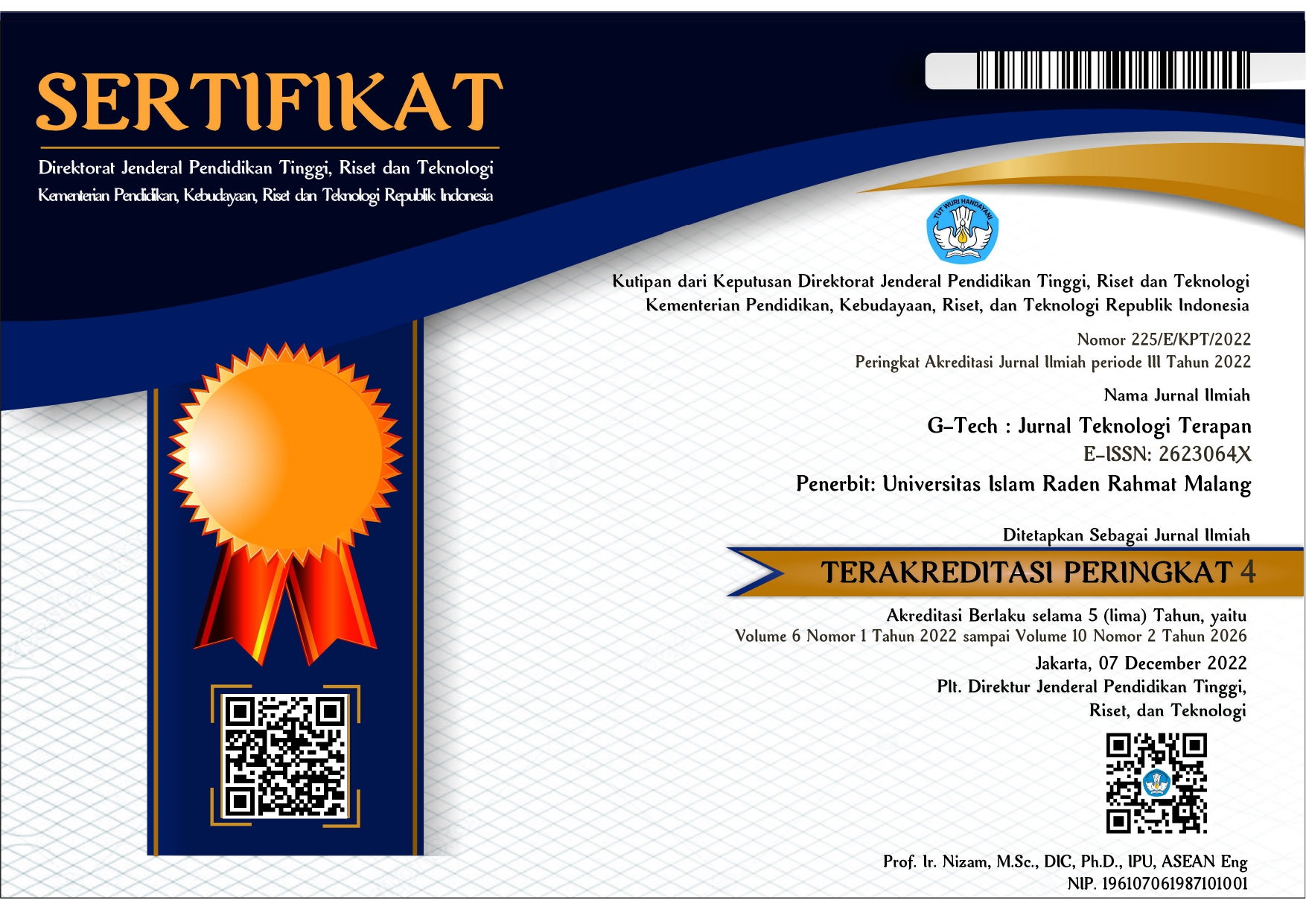
Implementation of Fuzzy Mamdani to Determine the Turnover of the Student Cooperative Business Sector
DOI:
https://doi.org/10.70609/gtech.v8i4.5427Keywords:
Fuzzy Mamdani, Clustering, K-Means, Data MiningAbstract
Student cooperatives (kopma) are cooperatives whose members are students from a particular university. In relation to the flow of funds in and funds out of kopma, the decision support system is a crucial tool for analyzing calculations of insufficient or excess funds.“This can minimize potential losses that arise as a result of inaccurate calculations of the flow of funds that have been collected. One effort to generate a decision support system is a fuzzy logic approach. This research aims to build a system that can determine cooperative turnover well using the fuzzy mamdani method.”“In this research, defuzzification was carried out using the centroid method with the help of MATLAB fuzzy toolbox r2016a software.””From the results of research that has been carried out by entering monthly income variables from January to December”in each sector, namely rental, photocopying and mini markets, it will produce turnover decision outputs of profit, break even and loss. Uses fuzzy mamdani to get output and has a membership function.”
References
Amni, D., Pd, S., Kom, M., Teknik, A., & Kerinci, A. K. (2023). Penerapan Metode Fuzzy Mamdani Pada Pemilihan Bidang Pekerjaan Sesuai Kompetensi (Studi Kasus Di Atak Kerinci). Jurnal SIMTIKA, 6(2).
Andi Saputra Mandopa, A. (2023). Aplikasi Fuzzy Mamdani Untuk Menentukan Tingkat Keberhasilan Dosen. SMART: Jurnal Teknologi Informasi Dan Komputer, 2(2), 59–66. https://doi.org/10.58222/smart.v2i2.275
Arifin, S., Muslim, M. A., & Sugiman, S. (2016). Implementasi Logika Fuzzy Mamdani untuk Mendeteksi Kerentanan Daerah Banjir di Semarang Utara. Scientific Journal of Informatics, 2(2), 179. https://doi.org/10.15294/sji.v2i2.5086
Astuti, M. E. A., & Bukhori. (2018). Dinamika Sosial Koperasi Mahasiswa. 8(2), 217–226.
Fajrianti, F., Bustan, M. N., & Tiro, M. A. (2019). Penggunaan Analisis Cluster K-Means dan Analisis Diskriminan Dalam Pengelompokan Desa Miskin di Kabupaten Pangkep. VARIANSI: Journal of Statistics and Its Application on Teaching and Research, 1(2), 7. https://doi.org/10.35580/variansiunm9355
George, J., Klir, & Yuan. (2008). Fuzzy Sets And Fuzzy Logic, Theory And Applications.
Hardianti Manurung, M. M. (2021). Penerapan Metode Fuzzy Mamdani Untuk Memprediksi Angka. Jurnal Nasional Komputasi Dan Teknologi Informasi, 4(6), 509–516.
Kartika, D., Sovia, R., & Sandawa, H. M. (2018). Penerapan Metode Fuzzy Mamdani untuk Memprediksi Angka Penjualan Token Berdasarkan Persediaan dan Jumlah Permintaan pada PT. PLN (Persero) Padang Berbasis WEB. Jurnal KomtekInfo, 5(1), 81–95. https://doi.org/10.35134/komtekinfo.v5i1.8
Klau, D. Y., Tursina, T., & Novriando, H. (2023). Implementasi Metode Fuzzy Inference System (FIS) Mamdani dalam Pemilihan Bidang Keahlian Mahasiswa. Jurnal Impresi Indonesia, 2(4), 372–383. https://doi.org/10.58344/jii.v2i4.2389
Lata, S., Mehfuz, S., Urooj, S., & Alrowais, F. (2020). Fuzzy Clustering Algorithm for Enhancing Reliability and Network Lifetime of Wireless Sensor Networks. IEEE Access, 8, 66013–66024. https://doi.org/10.1109/ACCESS.2020.2985495
Ong, J. O. (2013). Implementasi Algotritma K-means clustering untuk menentukan strategi marketing president university. Jurnal Ilmiah Teknik Industri, vol.12, no(juni), 10–20.
Putra, H., Kelviandy, M., & Eka Putera, B. (2018). Penerapan Kontrol Fuzzy Logic Berbasis Matlab Pada Perangkat Mesin Cuci. Multinetics, 4(2), 14–21. https://doi.org/10.32722/multinetics.vol4.no.2.2018.pp.
Putri, A. D., & Maulana, A. (2023). Penerapan Metode Mamdani Fuzzy Logic untuk Menentukan Pembelian Alat Berat dalam Proyek Migas di PT SMOE Indonesia. Jurnal Desain Dan Analisis Teknologi, 2(2), 138–149. https://doi.org/10.58520/jddat.v2i2.32
Qodar, G. L. (2020). The Application of Mamdani Method for Predicting The Best Portable Computer Based on Hardware and Price. Journal of Informatics and Telecommunication Engineering, 4(1), 33–47. https://doi.org/10.31289/jite.v4i1.3770
Sinaga, K. P., & Yang, M. S. (2020). Unsupervised K-means clustering algorithm. IEEE Access, 8, 80716–80727. https://doi.org/10.1109/ACCESS.2020.2988796
Sufarnap, E., & Sudarto, S. (2019). Penerapan Metode Fuzzy Mamdani dalam Penentuan Jumlah Produksi. Seminar Nasional Sains Dan Teknologi Informasi (SENSASI), Juli, 379–382. https://s.id/1SHDL

Downloads
Published
Issue
Section
License
Copyright (c) 2024 Fitriyah Fitriyah, Prasanti Mia Purnama, Lifatin Nada, Alfin Fuji Hidayati

This work is licensed under a Creative Commons Attribution 4.0 International License.